911:Occult symbolism IV
Site menu:
- Occult symbolism Intro
- History of oppression
- Social terrorism
- Economic terrorism
- Occult symbolism pages:
- Introduction to symbolism
- Part I (Egyptian mythology, Pyramid, All-seeing eye, Obelisk)
- Part II (Astrology)
- Part III (Stars)
- Part IV (Cross, Rods, Awen, Thunderbolt, Bell, Shell)
- Part V (Occultism)
- Part VI (Circles, Infinity, Spirals)
- Part VII (Deities)
- Part VIII (Colors)
- Part IX (Alphabets)
- Part X (Animals, Insects, Arachnids)
- Part XI (Plants)
- Part XII (Life, Death, Sexuality)
- Part XIII (Alchemy)
- Part XIV (Masonic symbolism)
- Part XV (Masonic places)
- Part XVI (Hand signs)
- Part XVII (Occult Media Programming)
Cross
One of the most important symbols of Catholics and Protestants is the cross. The priest makes the sign of the cross on the head of infants as they are sprinkled; churches are built in the shape of the cross; when Catholics enter church, they take holy water and make the sign of the cross; during Mass, the priest makes the sign of the cross 16 times and blesses the altar with the cross 30 times. The cross is universally worn as jewelry around the neck, and is prominent in professing Christian homes.
Early Christians considered the cross as the accursed tree, a device of death and shame, Hebrews 12:2. They did not trust in an old rugged cross. Instead, their faith was in what was accomplished on the cross (or stake, or whatever it was Jesus was impaled upon). That is how the Apostles preached about the cross, I Corinthians 1:17-18.
It was not until Christianity became paganized (or paganism was Christianized), when the cross image came to be thought of as a Christian symbol, part of worship. Crosses in churches was introduced in A.D. 431; the use of crosses on steeples did not come about until about 586. The Expository Dictionary of New Testament Words says the cross originated among the Babylonians of ancient Chaldea, used as a symbol of the god Tammuz. Almost any book of ancient Egypt shows the use of the Tau cross (shaped like the letter T) on old monuments and walls of ancient temples. Seymour says that the cross, unchanged for thousands of years, was reverenced . . . among the Chaldeans, Phoenicians, Mexicans, and every ancient people of both hemispheres, The Cross in Tradition, History, and Art, pp. 22, 26. The cross had been a sacred symbol of India for centuries among non-Christians. Prescott reports that when the Spaniards first landed in Mexico, they were shocked to behold the cross, sacred emblem of their own Catholic faith, reverenced in Aztec temples. A heathen temple in Palenque, Mexico, founded in the ninth century B.C., was known as The Temple of the Cross. Ancient Mexicans worshipped a cross as tota (our father), similar to apostate Israelites who worshipped a piece a wood as my father Jeremiah 2:27. In 46 B.C., Roman coins show Jupiter holding a long sceptre terminating in a cross. Vestal virgins (temple prostitutes) of pagan Rome wore the cross suspended from their necklaces, as Roman Catholic nuns do today.
Since Jesus died on a cross, some say, doesn't that make it a Christian symbol? Let us suppose He was put to death with a hatchet; would this be a reason to venerate the hatchet? Again, the important thing is not the way Jesus died, but who died (the son of God), and why He died (for the sins of mankind). Crucifixion was a common method of execution for flagrant crimes in Egypt, Assyria, Persia, Palestine, Carthage, Greece, and Rome. Seymour reports, Tradition ascribes the invention of the punishment of the cross to a woman, the queen Semiramis. [12]
- Various notes:
- See also: 4-pointed star.
X symbolism
- Various notes:
- Todo: take notes of this article on X symbolism.
- See also:
- Cult of Osiris
- Brotherhood of Death
- Cross of St. Andrew
- Skull and bones, necromancy
- phonetics/linguistic associated with the letter "X":
- "eXtermitate" (obstinate heretics - as the Catholic church and inquisition does)
- Ancient cultures:

(see previous)

Colossus of Ramesses II at Temple of Amun in Karnak [1]
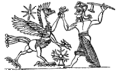
Sumerian depiction (see the mans headdress)
Note: rooster, griffin, 8-pointed star


- Catholic/masonic/Nazi/secret/... societies:

Georges Darboy (1813-1871), French Catholic priest, later bishop of Nancy, and then archbishop of Paris. [2]
Note: the horned hand sign.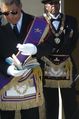
Masonic X symbolism

(see previous)
Note: the Maltese cross medal.
Symbol of the masonic Marshal. In the masonic lodge, he is appointed by the "Worshipful Master".

Jolly Roger pirate flag.

3rd SS Division Totenkopf - one of the 38 divisions of the Waffen-SS during World War II.
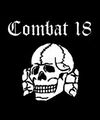
Combat 18 - the "armed wing" of the British neo-Nazi organisation Blood & Honour.

Skull & Bones, the secret society founded in 1832 at Yale University.

The skull and crossbones at the Shrine of Saint Joseph in Saint Louis, Missouri.
Note: The Butterfly and the monogram is made of the Greek letters chi, Χ and rho, Ρ. Pike calls this symbol the "Staff of Osiris" [3].


- Flags:

National flag of Scotland

Confederate States of America Battle Flag
This design was the basis of more than 180 separate Confederate military battle flags during the American Civil War (1861-1865).
Note: the red square, 13 pentagram stars and pyramids.
(see previous)
Confederate States of America flag


- Logo's:

U.S. Senate seal with crossed fasces
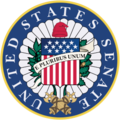
(see previous)
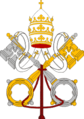
Vatican emblem
See more background here.
Lombard Odier Darier Hentsch.
Note: how seen from the top a pyramid's edges form an X.
HBOS - a UK based financial group which in 2008 merged with Lloyds TSB.

Halifax UK (one of the banking trading names of the Bank of Scotland plc which is owned by Lloyds TSB/HBOS)

Dexia - a Belgium bank

Max Factor - a cosmetics firm, founded in 1909 by Max Factor.


- Recent history:

Two crossed torches appear on the cover of "The Greater of Two Evils", a 2004 release by U.S. thrash metal band Anthrax
Note: the inverted pentagrams, the torches and Sig runes.
Aleister Crowley as Osiris

Ozzy Osbourne
Note: the "Oz" in his name, referring to "Osiris"/Sun/divine light/etc.
Austrian Viking Metal band Hrossharsgrani

The Misfits, an American horror punk band.
This is the artwork of their Misfits: Collection II album cover.
.jpg)


Labarum

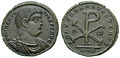
Coin of the Roman usurper Flavius Magnus Magnentius (303–353).


Equal length cross
Sunwheel cross

Maltese cross

Used by the Military Order of Malta and their partners in crime.

Queen Elizabeth II
Royal member of the inner-core of the Military Order of Malta called the Pilgrim Society.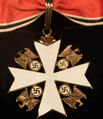
Order of the German Eagle service cross, instituted in 1937 by Adolf Hitler. See also: [5].

Order of the Bath medal. Founded by George I in 1725. See also: member lists and other UK knighthoods.

Insignia of RAF No. 22 Squadron displaying the Maltese Cross

Nazi Spanienkreuz [7] "Spanish Cross" medal

(see previous)

Masonic York Rite, new member's pin.

Prussian Order of Saint John
Note the differences with SMOM medal: Eagle in each corner, ...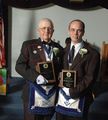
Mason with a Maltese cross medal.
See also these masonic degree diagrams.
Veterans of Foreign Wars - US congressionally chartered war veterans organization.

(see previous)
John McCain speaking at a Veterans of Foreign Wars meeting.


- Pour le Mérite (popularly known as the "The Blue Max").
- The medal was established in 1740 by King Frederick II of Prussia.

The Pour le Mérite medal.

(see previous)

Manfred von Richthofen
(b. 1892 - d. 1918)
German WWI fighter pilot popularly known as "The Red Baron", Richthofen was awarded the Pour le Mérite in January of 1917.
Hermann Göring
(b. 1893 - d. 1946)
Leading member of the Nazi Party
As a fighter pilot during WWI, Göring was awarded the Pour le Mérite.


- Royalty:
(todo)
- Celebrities (aka "stars"):

Tyra Banks
See also: pseudoccultmedia articles on her.
Miley Cyrus
See also: pseudoccultmedia articles on her.
(see previous)


Unequal length cross
Cross of Tau
- Various notes
- ...


Latin cross

Crucifix
This is a Latin cross upon which is fixed an effigy of Jesus. On some crucifixes a skull and crossbones are shown below the corpus.
This is a symbol used in Catholicism and not Protestantism, which use only a Latin cross.
Note: the Catholic sun symbolism.
Nazi Mutterkreuz ("mother's cross") medal.
Note: the golden square sun symbolism.


Inverted cross
- Various notes:
- See also: Cross of St. Peter

Inverted cross on the Pope's chair.

Logo of Norwegian black metal band Mayhem
Bestial Mockery, a Swedish black metal band

Gorgoroth , a Norwegian black metal band

Chelsea Clinton with an inverted cross necklace.


Cross and Crown
- Various notes:
- The Cross and Crown symbol represents the union of the Spiritual/Religious and Temporal/Political domination.
- Its a known Masonic symbol that dates to the Medieval Ages and the Knights Templar. It is not an ancient Christian symbol.
- "In the Masonic Report, we make this discovery: Question: What does Masonry's emblem of the 'Cross and Crown' actually symbolize?" Answer: "The 'Cross' of Freemasonry is a philosophical cross, according to Albert Pike, 'Morals and Dogma', p. 771. It is philosophical in the sense that it [also] represents the "generating fecundating principle" by the perpendicular shaft [Phallus], and the matrix of womb of nature, the female producing principle [Female Vulva], by the horizontal shaft. The philosophy of the Masonic cross is totally phallic. The 'Crown' of this Masonic emblem is also phallic, it being the first emanation of the Cabalistic Sephiroth ..." [C.F. McQuaig, "The Masonic Report", Norcross, Georgia, Answer Books and Tapes, 1976, p. 34]" [13]
- The Cross and Crown symbol represents the union of the Spiritual/Religious and Temporal/Political domination.

Pyramid-shaped grave of Mason Charles Taze Russell, who setup the Bible Student movement in 1876, from which the Jehovah's Witnesses was later created in 1931.

(see previous)

The Watch Tower which is the premier publication of the Jehovah's Witnesses.
Note: the cross and crown (upper left)
Cross and crown in a masonic lodge.
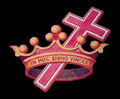
Royal Black Institution (or "Imperial Grand Black Chapter Of The British Commonwealth") a 'Protestant' masonic society.
Note: The motto written on the crown says "In Hoc Signo Vinces" is Latin for "in this sign you will conquer" or "by this, be victorious!".
(see previous)


Cross and crown... displays Knights Templar connection with Maltese Cross.


Cross and crown with Masonic compass and square emblem.
United Church of Christ
Note: Their slogan is "That They May All Be One" which echoes "From Many One" (from the latin: "E pluribus unum").
Emblem of the York Rite's Grand Council of Allied Masonic Degrees


Double Cross
- Various notes:
- Have you ever been double-crossed?
- See also: Double-cross rune, Cross of Lorraine.
- Hermetic alchemists of the Renaissance used the emblem as a symbol of earth and spirit by combining the square earth cross with the cross of Christ. When drawn symmetrically, it symbolised the hermetic maxim, "As above, so below".

Mason with a double cross on his cap

(see previous)
Sheriff badge of Riverside County.
Note: the bell centered in a star of saturn.
The double cross crest of the UK Royal Air Force (RAF) No. 41 Squadron.

Harrier jet from the UK Royal Air Force (RAF) No. 41 Squadron displaying the double cross on its tail section.

The symbol of the soul, Alchemist symbol for sulfur
See also: infinity
National flag of Slovakia
Coat of arms, Besalu City, Spain

American musician Marilyn Manson's Celebritarian Corporation, which is his self-proclaimed art movement.
Note: skull and bones, 13 spikes, masonic hand signs.


Cross of Baphomet
- Various notes:
- This sign is also used as the symbol of Baphomet.

A Scottish Rite mason with the sigil of Baphomet on his hat

(see previous)

In this photo, noted 33rd degree mason Albert Pike can be seen displaying his Cross of Baphomet pendent.

Sigil of Baphomet as the emblem of the Sovereign Grand Commander of the Supreme Council

(see previous)
Note: This version also forms an oblong square


Papal cross

papal cross in masonic imagery
Logo of the Norfolk Admirals hockey team in Norfolk, Virgina

The Hierophant which in some Tarot card decks named "The Pope", is the fifth trump or Major Arcana card in most traditional Tarot decks.
In Attica (Greece), it was the title of the chief priest at the Eleusinian Mysteries. A hierophant is an interpreter of sacred mysteries and arcane principles. [8]
Note: the cosmos hand signal


Rods
Awen
- Various notes:
- "The Order of Bards (OBOD) describe the three lines as rays emanating from three points of light, with those points representing the triple aspect of deity and, also, the points at which the sun rises on the equinoxes and solstices - known as the Triad of the Sunrises. The emblem as used by the OBOD is surrounded by three circles representing the three circles of creation." [14]
- See also:
- Energy (Energy vortexes have a center at which electricity contracts and magnetism radiates)
- Numerology: 3
- Triad hand sign
- M hand sign
- Hebrew letter shin (ש)
- Trident - a three-pronged spear. Tridents feature widely in mythical, historical and modern culture. The trident is also depicted as a symbol for Poseidon and Satan's weapon.
Druidic symbolism:
 Druidic Awen ray variations:
- Invoking (dispersing/radiating)
- Tribann (center/union)
- Evoking (converging/contracting)


- Trident logos:

The now bankrupt Enron


Reverse Awen
- Various notes:
- What is the real name of this symbol?
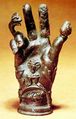
Bronze hand of the Roman mystery cult of Sabazios/Dionysus (see also the Ancient Greece mystery schools: Dionysian Mysteries and the later Eleusinian Mysteries and Orphic Mysteries).
It dates from the late Roman Empire, when all forms of divination from scrying to astrology, flourished.
Note: the ] serpent/dragon/lizard head, the pine cone, the reverse awen handsign, the cow/bull above the altar, and something that resembles a human in a pupa.
Swiss guard - the guards of the Vatican.

Jesuit Order seal.
See also: Black sun.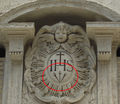
(see previous)


- Is it related to the mathematical principle of the Fleming's / Right-hand rule

Fasces
- Various notes:
- Occult etymology: Fascism
- See also:
- E pluribus unum ("from many one") (see: group think, organized religions, fascism/communism/socialism/centralized-capitalism, etc.)
- Lictor
- "The Global Fasces"
Bundled rods
- Various notes:
- See also: Switch rod, Birching, Tarot Suit of wands

Roman lictor holding fasces.

Fasces on stamp. (Vatican-Jesuit fascists: Benito Mussolini and Adof Hitler)
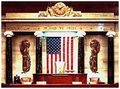
(see previous)

(see previous)

Lincoln Memorial.
Note: that Abraham Lincoln himself was murdered by the Vatican-Jesuit fascist conspiracy, because he opposed them.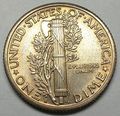
Mercury Dime (1916–1945)
The fasces appeared on the reverse side of all US dimes during this period.
Note: the Latin motto: "E PLURIBUS UNUM" (Out of Many, One), the Hermes / Mercury symbolism on the other side of this coin.
Fasce on Italian Stamp


- Fasces in logo's:
U.S. Senate seal with crossed fasces
See: cult of Osiris
Colorado State Seal
Note: the pyramid and all-seeing-eye.
Crest of the Royal Air Force's No. 28 Squadron


Bundled arrows

(see previous)

(see previous)

(see previous)

Falange (Spanish fascistic group).
Note: (to research) the 2 half-circles.
(see previous)
Note: (to research) the 2 half-circles.
The official logo for the United Sates Senate

Great Seal of the United States since 1782.
See also: "Masonic Symbolism: The Great Seal of America"
(see previous)
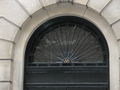
Council on Foreign Relations headquarter door in New York, US. The CFR is the 'trusted' (read: corrupt) third party government think-tank.
Note: the sun symbolism.
Forum quote: "You see eight arrows. The arrow is the symbol of a plasma discharge. Now you understand the symbol of mars. Number five is the square and the circle and that is a pillar. So 58 is pillar of eight and that is saturn. In one of my posts I said something about Saturn being the 13. 5+8=13." [11].


Bell
- Logo's:
Sheriff badge of Riverside County.
Note: the double-cross and the star of saturn.



- Non-logos:



Art Bell was confirmed by William Cooper to be a Mason and a New World order shill.


![[4]](http://en.wikipedia.org/wiki/Image:StaMariaColl004.JPG)
